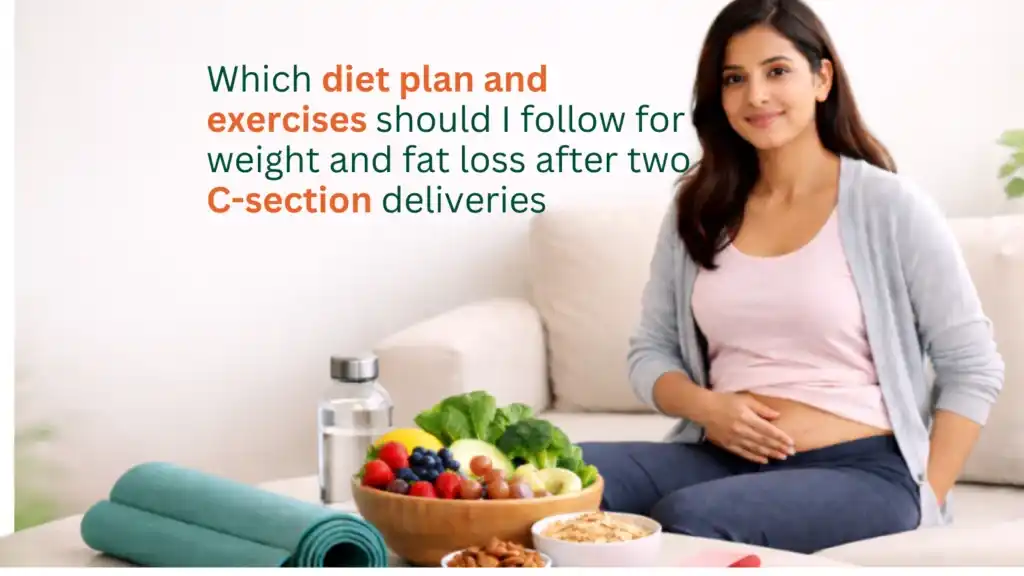
If you’re looking for an effective diet plan and exercises program after having had 2 deliveries via C-section then you’re not alone in this process.
A lot of women find themselves having gained weight, their core muscles weak and have very little energy after multiple surgical procedures, but with the right plan there’s still an opportunity for you to lose weight safely, lose body fat and regain that strength you had — without injuring your body.
This guide has been developed from the viewpoint of someone who’s actually experienced the process of recovering from having two babies via c-section, so therefore is written from an experiential and practical standpoint to help you understand what really does work after c-section recovery.
Understanding Your Body After Having 2 C-Sections.
Before diving into any kind of nutritional or exercise program, it’s important first to understand what your body’s been through; and how it will continue to change as you go through your recovery.
Having a c-section is a major surgical operation, and will impact your body in several ways, including;
- Core Muscles(in particular the abdominal wall)
- Pelvic floor strength
- Hormones
- Metabolism
After having had two c-sections, your body will take more time to heal than if you had just had one c-section; and therefore your focus should not so much be about how to lose weight fast; as to how can I lose fat safely and eventually build my strength back up?
When can you begin your diet plan and exercises?
Diet:
A healthy diet can be begun immediately after delivery, especially when breastfeeding.
Your new diet should be:
- Nutrient-dense
- Balanced
- No caloric restriction (the first 2 months)
Exercise:
- Lightly – 6 to 8 weeks following your doctor’s approval;
- Moderately – 10 to 12 weeks;
- core after it has healed.
Don’t rush into doing hard workouts, or else you will risk complications (e.g. hernia or muscle separation (diastasis recti).
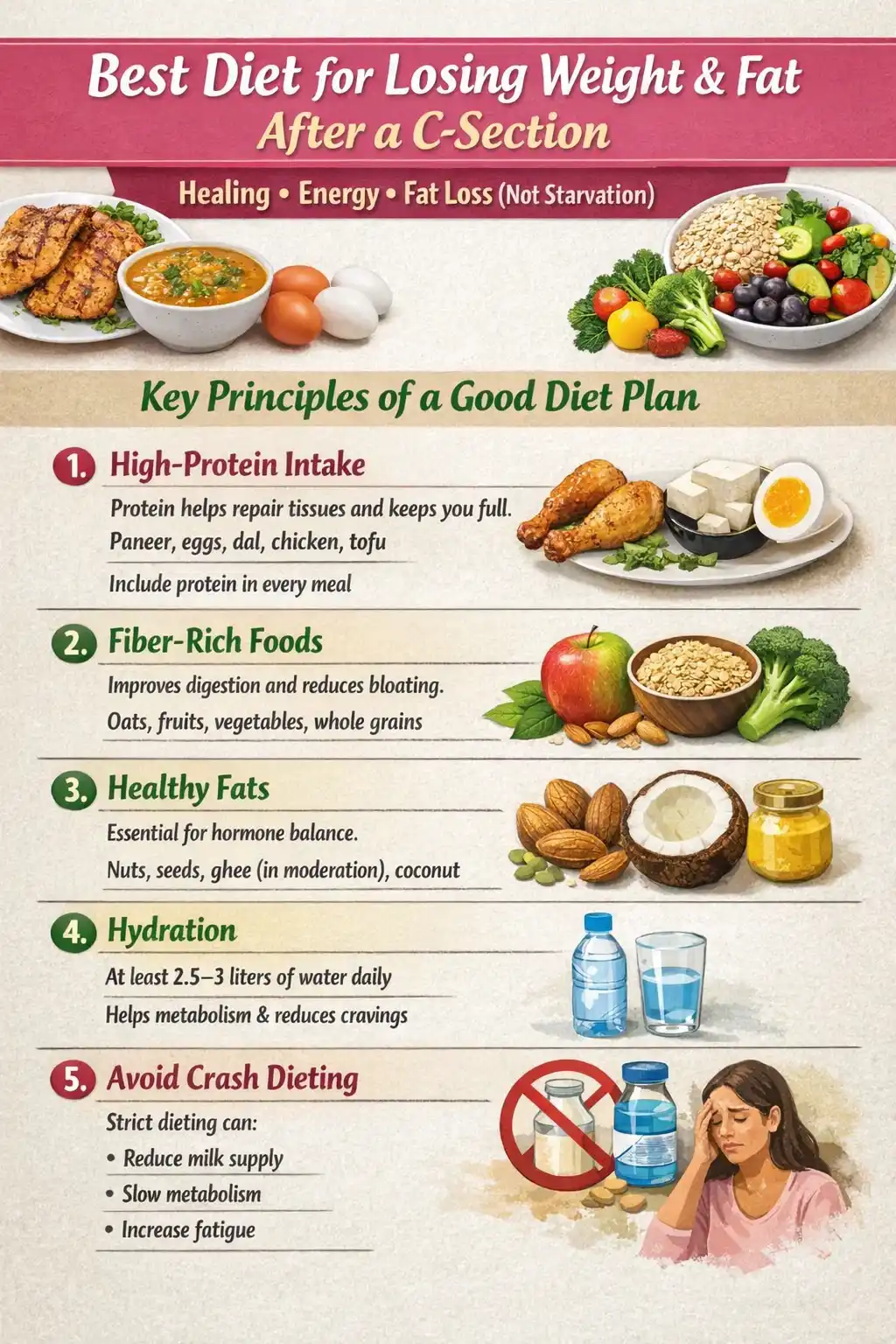
Best diet for losing weight and fat after a c-section: Follow a diet low in calories.
Your diet plan should support:
- Healing
- Energy
- Fat loss (not starvation)
Key Principles of a Good Diet Plan
1. High-Protein Intake
Protein helps repair tissues and keeps you full.
- Paneer, eggs, dal, chicken, tofu
- Include protein in every meal
2. Fiber-Rich Foods
Improves digestion and reduces bloating.
- Oats, fruits, vegetables, whole grains
3. Healthy Fats
Essential for hormone balance.
- Nuts, seeds, ghee (in moderation), coconut
4. Hydration
- At least 2.5–3 liters of water daily
- Helps metabolism and reduces cravings
5. Avoid Crash Dieting
Strict dieting can:
- Reduce milk supply (if breastfeeding)
- Slow metabolism
- Increase fatigue
Indian Post-C-Section Diet
Morning (Empty Stomach)
Warm Water + Jeera/Lemon
Breakfast
Vegetable Oats/Moong Dal Chilla/Boiled Eggs
1 Cup Milk or Tea (Low Sugar)
Mid-Morning Snack
1 Piece of Fruit (Apple, Papaya, or Guava)
Small Handful of Nuts
Lunch
1-2 Roti + Dal + Sabzi + Salad
Curd for digestion.
Evening Snack
Roasted Chickpeas/Makhana or Green Tea.
Dinner
Light Dinner (Soup + Paneer/Dal + Veg)
Avoid Large Carbs in the Evening.
Before Bedtime
Turmeric Milk (Optional)
Best Exercises For Two C-Sections
The most important part is choosing the right kind of exercise. Focus on low-impact and core-safe movements.
Stage One: Gentle Recovery Exercises (6-8 Weeks)
To improve circulation and decrease stiffness.
Walk for 10-20 Minutes Per Day
Deep Breathing
Ankle & Leg Exercises
Stage Two: Strengthening Phase (Eight- to Twelve-Weeks Postpartum)
Once everything is cleared off from your doctor:
1. Kegel Exercises
Strengthening the internal musculature of your pelvis and preventing any type of issues with incontinence and/or weakness.
2. Heel Slides
Activating the lower abdominal muscles through a proper range of motion in a controlled manner.
3. Pelvic Tilts
Gradually flattening the abdomen.
Stage Three: Fat Loss and Core Strengthening Phase (After Twelve Weeks Postpartum)
Now you may gradually start to add:
1. Low-impact Cardio
Brisk walking
Cyclical training (cycling)
Light Aerobic activities.
2. Core-Safe Exercises
Modified Planks
Bird Dog Exercise
Glute Bridge.
3. Light Weight Training
Body Weight Squats
Elastic Resistance Bands.
What Exercises Should be Avoided After Having a C-Section?
Avoid the following exercises until fully recovered.
Starting Crunches/Sit-Up Exercises too soon.
Heavy Weight Lifting.
Running too Soon.
Too Much Intensity Workouts.
These may impede the healing process and increase the time until a return to your normal workout routine.
Common Errors Women Typically Make
Not Starting Early Enough — cause long-term damage.
Skipping Meals — Thereby leading to weakness and decreased rate of fat-loss.
Only Focus on Belly Fat — Spot Reduction type of workouts do not work; the focus should be on overall fat loss.
Forgetting to Rest — Sleep plays a very important role in the recovery process and also in fat-loss.
How to Lose Belly Fat Post-C-Section
After having a baby, belly fat is often the hardest to lose. But this is what you need to do to see results:
- Combine exercise with diet. If you are only doing one of these, you won’t get as much benefit.
- Work gradually towards strengthening your core.
- Continue to maintain a calorie balance (not a calorie deficit).
- Be consistent with your effort for a minimum of three to six months.
Remember that it took nine months for your body to get to where it currently is. You can’t expect it to transform back to where you want it to be overnight.
Realistic Timeline for Results
1–2 months: Increased energy and improved digestion
3 months: Inches off your body
6 months: Loss of fat and increase in strength
9–12 months: Major transformation
Being consistent is ultimately more important than being fast.
Expert Opinions on Recovery
- Eating meals made at home will be better for your body than those made in factories or with lots of sugar.
- Stay active each day instead of just when you are working out.
- When seeing how far you have come, write down other measurements instead of only your weight.
- Seek professional help if you aren’t able to figure out how to do something on your own.
Final Thoughts
It is important to think about the safety, patience and consistency of your new exercise and/or nutrition program after having had two c-sections before making any decisions about how much you can be pushed back to your “normal” self very quickly.
Your body has experienced many changes but you do not want to push yourself or let anyone push you back into returning to your old way of life before you have had two c-section deliveries.
You will want to focus on gradually improving your nutrition and engaging in diet plans and exercises while losing inches and pounds to gain strength whilst keeping yourself healthy.
Need Help?
Check Our FAQs
Find answers to common question
You can start following a healthy diet immediately after delivery. However, exercise should only begin after your doctor’s approval (usually after 6–8 weeks). Start with low-impact activities and gradually increase intensity.
A balanced diet with high protein, fiber-rich carbohydrates, and healthy fats is ideal. Include foods like eggs, paneer, dal, chickpeas, green vegetables, and whole grains. Avoid crash dieting and focus on sustainable eating habits.
Safe exercises include walking, pelvic floor (Kegel) exercises, low-impact aerobics, and pelvic tilts. Avoid heavy workouts or intense core exercises in the early recovery phase.
Focus on overall weight loss through a balanced diet, regular exercise, and staying hydrated. Include core-strengthening exercises once your body is ready, as spot reduction is not possible.
You can start gym workouts after 10–12 weeks with proper medical guidance. Begin with light weights and gradually increase intensity as your body recovers fully.
Yes, gradual weight loss is safe during breastfeeding. Avoid strict calorie restriction, as it may affect milk supply. Focus on a nutrient-rich diet to support both recovery and lactation.