
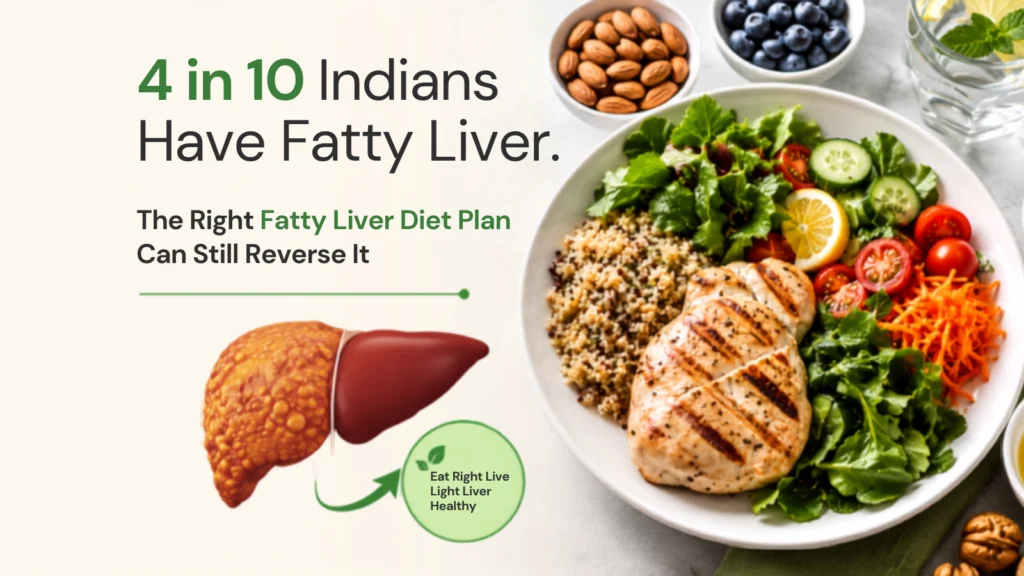
A study published in The Lancet Regional Health in early 2026 found something that stopped countless doctors in their tracks. Out of 7,764 screened adults from 27 Indian cities, 39 percent were affected by non-alcoholic fatty liver disease. And most of them had no idea.
Fatty liver isn’t a condition that’s always loud. It is not typically painful or presents with symptoms that may be felt. It sits quietly in the background, frequently revealed only by performing a standard ultrasound or a blood test for something completely different.
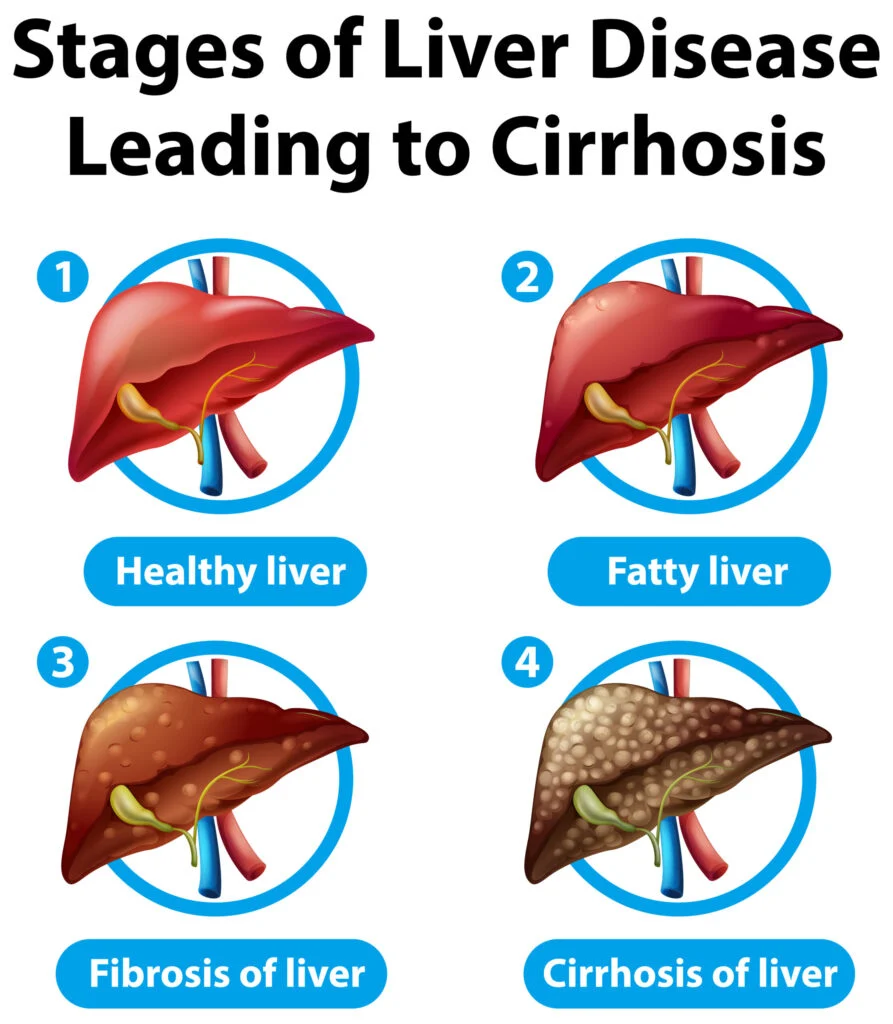
But if unaddressed, it moves forward. It can give rise to liver inflammation, fibrosis, cirrhosis and, in major cases, liver cancer. The good news is that fatty liver is reversible in its earliest phase. And in reversing it, a well-structured fatty liver diet plan is the most powerful tool.
Why Is Fatty Liver So Common in India Now?
Ten years back, fatty liver was mainly regarded as a problem attributed to heavy alcohol use. That picture has changed greatly. In India, today in most cases, a vast majority is non-alcoholic.
This is primarily due to obesity, type 2 diabetes, insulin resistance, and metabolic syndrome. Urbanisation has been a driving factor. For a growing percentage of the urban population, the typical lifestyle is sitting long hours, late-night eating, ultra-processed snacks, refined carbohydrates and sugary drinks.
In fact, it was only in 2021 that India was the first country in the world to involve NAFLD in its National Programme for Prevention and Control of Non-Communicable Diseases. That early detection was significant. The health ministry has had alarms for years. The 2026 Lancet data confirms that those alarms were justified.
What is a fatty liver diet plan really about
There is currently no medication approved for non-alcoholic fatty liver disease. This is not where a prescription will fix it. Diet and lifestyle modification are essential, so the quality of your fatty liver diet plan is more important than pretty much anything.
A diet for fatty liver created in a clinical setting is intended to decrease the amount of fat stored in the liver tissues, improve insulin sensitivity, decrease inflammation, and also to facilitate the innate healing of the liver by the liver. It is not about eating less. It’s about wanting to cook new, new foods.
The key principles,
That define a great diet program suitable for fatty liver are:
- Cutting refined carbs (white rice, maida, added sugar) fuels fat storage in the liver
- Add more fibre in the form of vegetables, whole grains and legumes to slow the absorption of sugar in blood and lower hepatic fat
- Consuming healthy fats from nuts, seeds or cold-pressed oils and avoiding trans fats and deep-fried foods
- Prioritising protein at a meal to develop a strong protein body part and to maintain muscle mass, while supporting metabolic function
- Excluding or reducing alcohol, even extremely in individuals with non-alcoholic fatty liver, as alcohol aggravates liver inflammation
These are not good-for-you healthy-eating guidelines. This way, when personalized to a user’s metabolic profile, food habits, cooking habits, and other chronic diseases it results in an obvious positive effect on liver enzyme content and ultrasound results in months.
The Indian Diet and ‘fatty’ liver: A complex relationship
Here’s something that most people don’t even anticipate. But made simply, traditional Indian home food can actually be quite good for liver health. Dal, sabzi, roti, curd and seasonal vegetables make up a relatively balanced base that supports metabolic function.
The problem is what has been added to and replaced since the modern Indian diet. Packaged biscuits served with morning tea. Two or three heavy restaurant meals in a week. Health drinks sold as sweetened milk drinks. Ordering in is easy. These trends, added to a usually sedentary workday, are what have driven fatty liver prevalence to about 40 percent in urban India.
A healthy diet to eat fatty liver doesn’t require you to just skip Indian food. Its advice is to return to a better version of it and make targeted changes, using your own lab reports, body composition and lifestyle as a guide. That’s quite unlike going with a one-size-fits-all chart downloaded from the internet.
How Long Does It Take to Get the Results?
It is undoubtedly the first question most ask. The answer is encouraging. According to research findings showing that through diet changes and moderate exercise, a body weight of 5 to 10 percent should be reduced; in reality, this means greatly beneficial changes in liver fat levels. Liver enzyme levels have started to normalise in patients 8-12 weeks after a diet plan consisting of an orderly fatty liver diet as the patients. The key word is consistently. Fatty liver is not reversed after two good weeks and three bad weeks.
It takes effective practice in your real life, your food culture, your schedule and your current health conditions, and that’s what that is. That is precisely what a fitted diet plan is written for you by a skilled clinical nutritionist.
When Diet Is Not Everything!
For fatty liver patients with diabetes, hypertension, PCOD, or thyroid disorders, a general diet menu will give nothing. These conditions interact with liver metabolism in distinct manners. To manage one by itself without having regard towards the others may slow down progress or lead to worse other conditions even as liver health rises.
That is how it is important to collaborate with a clinical nutritionist, rather than self-prescribe. A proficient nutritionist knows your precise medical history, understands the multiple ways in which your existing conditions are interfering with each other, and develops a fatty liver diet plan that addresses the entire picture, not just the liver.
Your Liver Can Still Recover
Forty percent is a great number. But it also means that fatty liver is common now enough to take it seriously without a complete panic. It’s not a sentence.
For most people who are already in the early or intermediate stage, consistent dietary modification is enough to undo this damage, restore normal liver function. Your starting point must be a proper assessment done; understanding your specific high-risk/low-benefit profile.
From there it is to develop your eating pattern which is not geared for a template but based on your body and you. If you have a fatty liver, or have metabolic risk factors, it’s a good time to act now. Our liver is forgiving to you in ways that you never think of. But only if you give it what it needs.
Reference
Arvind M, Verma A, Raj K S, Prakash S, et al. (234 authors total). “Burden of MASLD and liver fibrosis: evidence from Phenome India cohort.” The Lancet Regional Health, Southeast Asia. Volume 45, Article 100723. Published: 3 February 2026. DOI: 10.1016/j.lansea.2026.100723 Funded by: CSIR, India (Grant HCP47) Available at: https://www.thelancet.com/journals/lansea/article/PIIS2772-3682(26)00008-9/fulltext
Need Help?
Check Our FAQs
Find answers to common question
Yes, an early-stage fatty liver can usually be reversed with a proper diet, regular exercise, and lasting lifestyle changes.
To reduce fat accumulation in the liver, avoid sugar-sweetened beverages, refined carbohydrates, fried foods, processed snacks, and excessive alcohol consumption.
Many people notice improvements in liver enzyme levels and reduced liver fat within 8–12 weeks of following a consistent healthy diet and lifestyle plan.
Yes, traditional Indian meals that include dal, vegetables, whole grains, and curd can support better liver health when prepared with minimal oil and balanced portions.
A personalized fatty liver diet plan is designed according to your health condition, lifestyle, nutritional needs, and goals, helping achieve better liver recovery outcomes.