
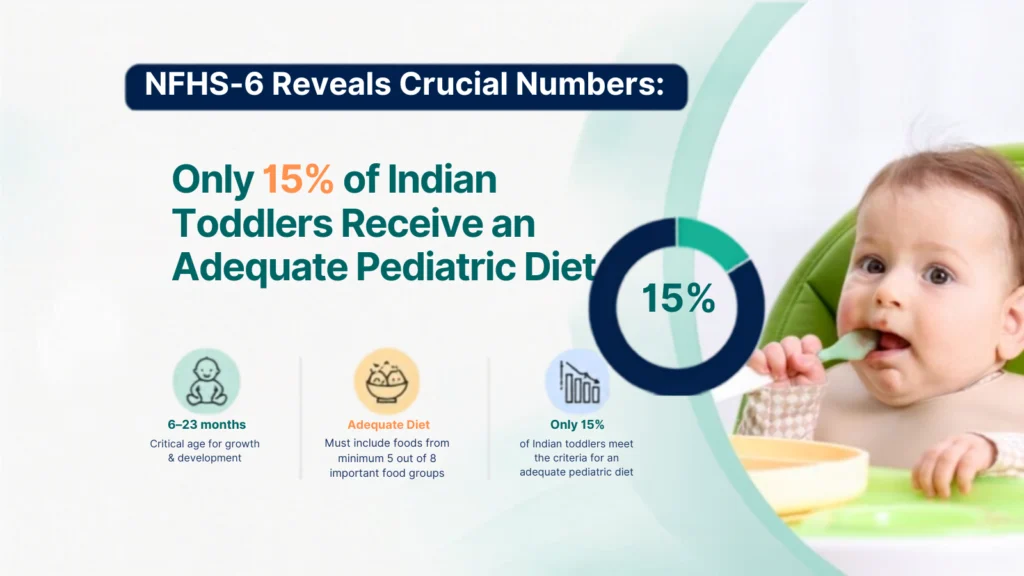
NFHS-6 finds only 15.3% of Indian toddlers get an adequate pediatric diet. Here is what the survey reveals and how parents can fix the gap.
Let’s be honest. Most Indian parents believe their child is eating well. There is dal at home, milk to drink, and a biscuit given when the child cries. That’s why the new National Family Health Survey-6 number was so surprising.
In India, a startlingly low 15.3% of kids aged 6-23 months receive an adequate pediatric diet according to the country’s largest Health Survey based on over 670,000 homes and over 715 districts. Therefore, the time to rethink child nutrition for all families in India is now.
Let’s Start with Some Good News
According to data from NFHS-6, which took place in 2023-24 and was published by the Union Health Ministry in June 2026, there has been real progress. There are fewer children who are too short for their ages, more vaccinated children, more babies born in facilities, and improved maternal health.
In short, India is doing better at making sure that children are born safely and remain safe from illness. But feeding them well during the most important window remains the major challenge.
Why Is the Six to 23 Month Window So Important?
Between six months and two years, breastmilk alone is no longer enough, so complementary feeding begins. This is also when the brain grows the most. The government’s “Poshan Pakhwada” campaigns this year noted that over 85 percent of brain development occurs by age six, with the first 1,000 days being the most crucial.
It can be stated that the idea of an adequate children’s diet at this point is relatively simple on paper. Children require a minimum amount of food in accordance with their age and must consume food from the various food groups: grains, legumes/vegetables (pulses), dairy products (milk/yogurt), egg/meat, and fruits & vegetables. If either meal frequency or meal variety is not 100%, then this will lead to inadequate meals. This occurs to approximately 85% of Indian preschool-age children.
Where Things Go Wrong
It is rarely about a lack of love, and not always about money either. Look at a typical day and the problems become clear very quickly.
A child is given dal ka pani and rice mash for months because “solid food is heavy.” Eggs are delayed for no medical reason. Packaged food enters the diet before the first fruit does. A biscuit or a sugary “health drink” quietly replaces a proper mid-morning meal. Foods rich in iron are hardly included, which is why nutritional anaemia remains common across age groups.
On top of this, highly processed foods are becoming more common. Researchers have noticed a strange pattern in Indian children: many are undernourished but also carry adult-level fat readings in their blood, driven by refined carbs and packaged snacks. We are underfeeding and overfeeding the same generation at once.
What an Adequate Pediatric Diet Really Looks Like
Keep in mind what you will be putting in front of them. From 6 months of age, give them thick, home-cooked mashed food rather than thin; avoid watery food before 8-9 months. By 8-9 months, they should be eating food from at least four or five food groups each day, including eggs, curd and well-cooked dals, all of which are inexpensive protein sources. Fresh seasonal fruit should be preferred to any juice. Furthermore, small, frequent meals are more beneficial than two large meals.
One guideline: If the product is in a shiny package with a cartoon on it, it is a snack, not a meal. Last year, FSSAI banned the words “ORS” on sugary drinks because of an 8-year study from a paediatrician who demonstrated their adverse effects on dehydrated children.
The Way Forward
NFHS-6 proves that India can improve major health indicators when the system and families work together. Vaccination did it. Institutional deliveries did it. Giving every child an adequate pediatric diet is now the unfinished task, and unlike vaccines, this one is decided three times a day at the family dining table.
The 15.3 percent figure is not a judgment on Indian parents. It shows how little reliable child nutrition advice reaches them, and how much marketing does. Filling that gap starts with asking a paediatrician or a qualified dietitian what your child’s plate should look like, rather than asking a packet.
Need Help?
Check Our FAQs
Find answers to common question
NFHS-6, released in May 2026, reported improvements in several health indicators, but only 15.3% of children aged six to twenty-three months receive an adequate diet.
An adequate diet includes age-appropriate meal frequency and daily consumption of a variety of foods from different groups such as grains, pulses, dairy products, eggs or meat, fruits, and vegetables.
This stage is known as the complementary feeding period, when breastmilk alone is no longer enough. Poor nutrition during this phase can lead to stunting, anaemia, and developmental delays that may be difficult to reverse later.
No. Many packaged products contain added sugar and refined carbohydrates. Home-prepared meals generally provide better daily nutrition and commercial products should not become a regular part of a child's diet.
Parents should seek guidance from a paediatrician or qualified dietitian if their child has poor weight gain, persistent food refusal, low energy levels, pale appearance, or if they need help starting complementary feeding.