
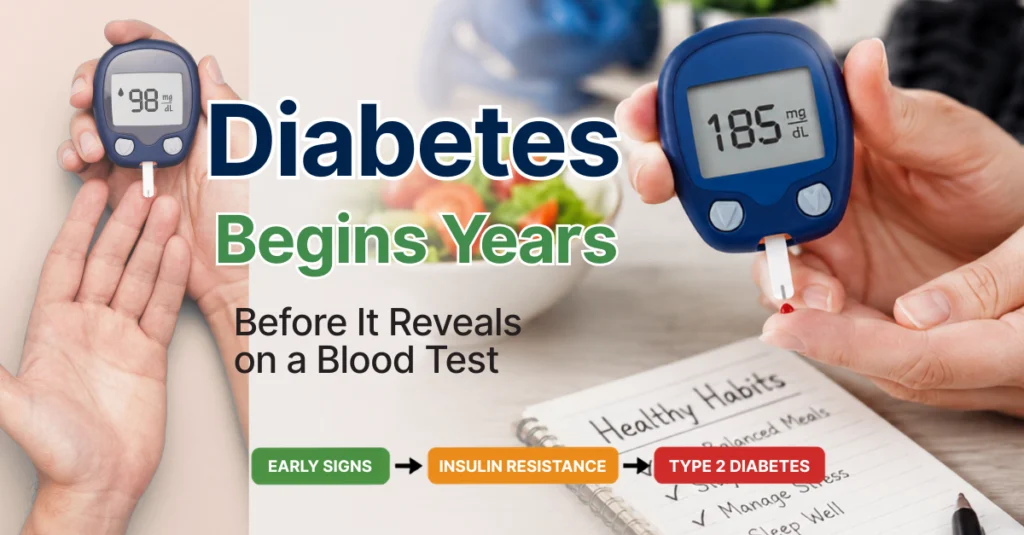
Many people with Type 2 Diabetes have unhealthy insulin resistance. Learn how to notice early warning signs such as fatigue, sugar cravings, and morning tiredness, and how diet and exercise support them.
To be honest, Most people check for diabetes only when fasting sugar, Postprandial sugar, or HbA1c starts going high. But the truth is, type 2 diabetes seldom appears on the day your blood test starts showing an abnormal finding. It starts much earlier.
For many, the problem at the beginning is not with “high sugar.” The first issue is insulin resistance. That means your body produces insulin but your cells aren’t responding properly. In order to regulate blood sugar, the pancreas begins producing increasingly more insulin. For a time, your reports may still appear normal. But inside the body, the battle has begun. CDC also said insulin resistance ties closely to prediabetes and type 2 diabetes, and early treatment works to improve insulin sensitivity.
At the very early stage, your body works very hard to keep blood sugar stable. The pancreas compensates, releasing additional insulin. So fasting sugar may appear normal, HbA1c may not appear alarming, and you may think everything’s OK. But gradually this additional pressure endures for months and years. If insulin resistance remains untreated, the pancreas may be unable to keep up. That is when blood sugar starts to climb and eventually diabetes appears on reports. That is why diabetes is not suddenly transmitted. It is often the final result of a long metabolic malfunction.
Early Warning Signs of Insulin Resistance and Type 2 Diabetes
Not every person with insulin resistance presents with symptoms, but much of the time, it’s a warning signal before the diagnosis. Those telltale signs should not be dismissed:
- Constantly tired or depleted in energy.
- Morning fatigue even after sleeping.
- Cravings for sugar, especially after eating or at night.
- Feeling sleepy after eating carbohydrate-dense meals.
- An increase in belly fat or difficulty losing weight.
- Frequent hunger.
- Mild low sense of motivation to be active in every activity.
- For some people, dark patches around the neck or skin folds occur.
The underlying causes for these symptoms can be other such as thyroid problems, anemia, vitamin deficiencies, poor sleep, or stress. But, if they are happening frequently, one should make sure to monitor your metabolic health.
Insulin is a small key that assists sugar with access to the cells in which it provides fuel. When cells cease responding, sugar stays in the blood, and the body can make more insulin to control it. Over time, this can lead to:
- Prediabetes.
- Type 2 diabetes.
- Gain in weight, especially around the abdomen.
- Fatty liver.
- High triglycerides.
- Metabolic difficulties in women with PCOS.
- Risk of heart disease heightened.
The good news is that insulin resistance may become better with the right lifestyle. Dietary intervention, weight loss where needed, and physical activity can prevent or delay type 2 diabetes, according to NIDDK.
A low-carb, high-fiber, protein-heavy diet decreases unnecessary spikes in glucose production and reduces insulin consumption from the body. This does not entail eliminating all carbohydrates. That means picking the right carbohydrates, eating portion size restrictions, avoiding refined foods, and making meals that are structured around proteins, vegetables, healthy fats, and fiber.
Exercise is just as vital. Even a daily walk after meals will make your muscles use glucose more efficiently. Physical activity can make the body more susceptible to insulin and can keep blood glucose low for several hours after exercise, ADA says.
- Start with simple steps:
- Eat protein in every meal.
- Cut down on sugar, bakery products, juices, biscuits, and refined snacks.
- Add salad or vegetables prior to main meal.
- After lunch and dinner: 10–15 minutes walk.
- Do strength training 2–3 days a week.
- Sleep on time.
- Manage stress.
Don’t wait for HbA1c to rise above the diabetes range.
The Way Forward
Diabetes prevention begins well before the diagnosis of diabetes.
You might be asking for help if you are always feeling sleepy, wanting sugar, waking up tired, adding belly fat, or feeling sleepy after meals. When the blood test says “diabetes,” don’t wait.
At HealthifybyAnu, we’re all about early identification and sustainability where you’re putting your food, exercising, sleeping, and reprogramming habits in place to fix the root cause from the start. Because when insulin resistance is caught early, you can reverse that.
Your blood test may look normal to you today, but your body is already sending signals. Listen early.
One Response