
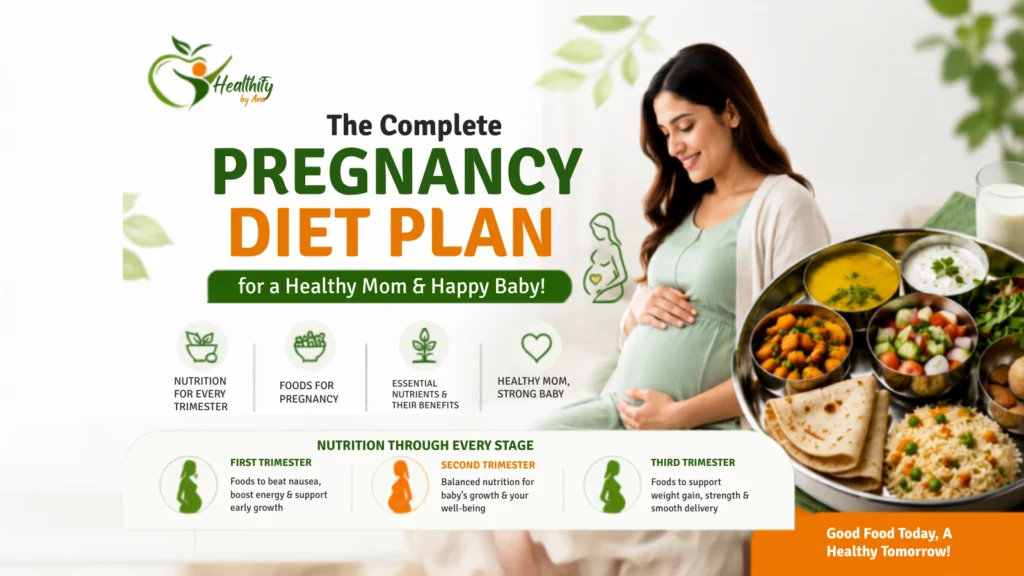
Pregnancy is an important time for both the mother and the growing baby to eat well. The Indian pregnancy diet plan helps the baby grow, gives the mother more energy boosts her immune system and lowers her risk of complications.
By trying to eat more, most experts say to focus on eating meals that are well-balanced and full of nutrients. HealthifyAnu helps people live healthier lives by giving them personalized nutrition advice and helping them plan healthy meals.
Their method encourages women to eat in a balanced way, which can help them during important times like pregnancy.
Why Does Nutrition Change During Pregnancy?
Because the baby is developing at different rates during pregnancy, nutritional needs change too. The baby’s organs and nerve system start to grow during the first three months of pregnancy. More attention is paid to growth, bones, muscles, and blood flow in the second trimester.
A well-balanced Indian pregnancy diet plan helps the baby grow in a healthy way and gives the mother more energy. When planned correctly, traditional Indian foods can often give you all the nutrients you need.
First Trimester Pregnancy Diet (Weeks 1–12)
Many women feel sick, throw up, be tired, and not want to eat during the first three months of pregnancy. At this point, it’s very important to eat things that are high in folic acid, iron, and vitamin B6.
People often say to eat foods like oranges, spinach, lentils, citrus fruits, oats, and whole grains. Most of the time, it’s easier to handle small meals more often than big ones. Ginger tea, lemon water, and simple things you make yourself may also help you feel better.
People often choose simple Indian meals like idli, khichdi, vegetable poha, and curd rice because they are light and easy to stomach.
Second Trimester Pregnancy Diet (Weeks 13–26)
Most women feel better in the second trimester because their hunger and energy level get better. The baby needs more calcium, protein, good fats, and iron during this time because it grows so quickly.
Eggs, nuts, seeds, ragi, whole grains, milk, paneer, curd, and fresh veggies all become important parts of the diet. Foods that are high in iron and vitamin C, like lemon or amla, may help the body absorb iron better.
During this time, healthy snacks like fruit bowls or dry fruits, as well as homemade Indian meals like roti with sabzi, dal with rice, paneer dishes, and vegetable pulao, can help keep you well-fed.
Comparison Between First and Second Trimester Diet Needs
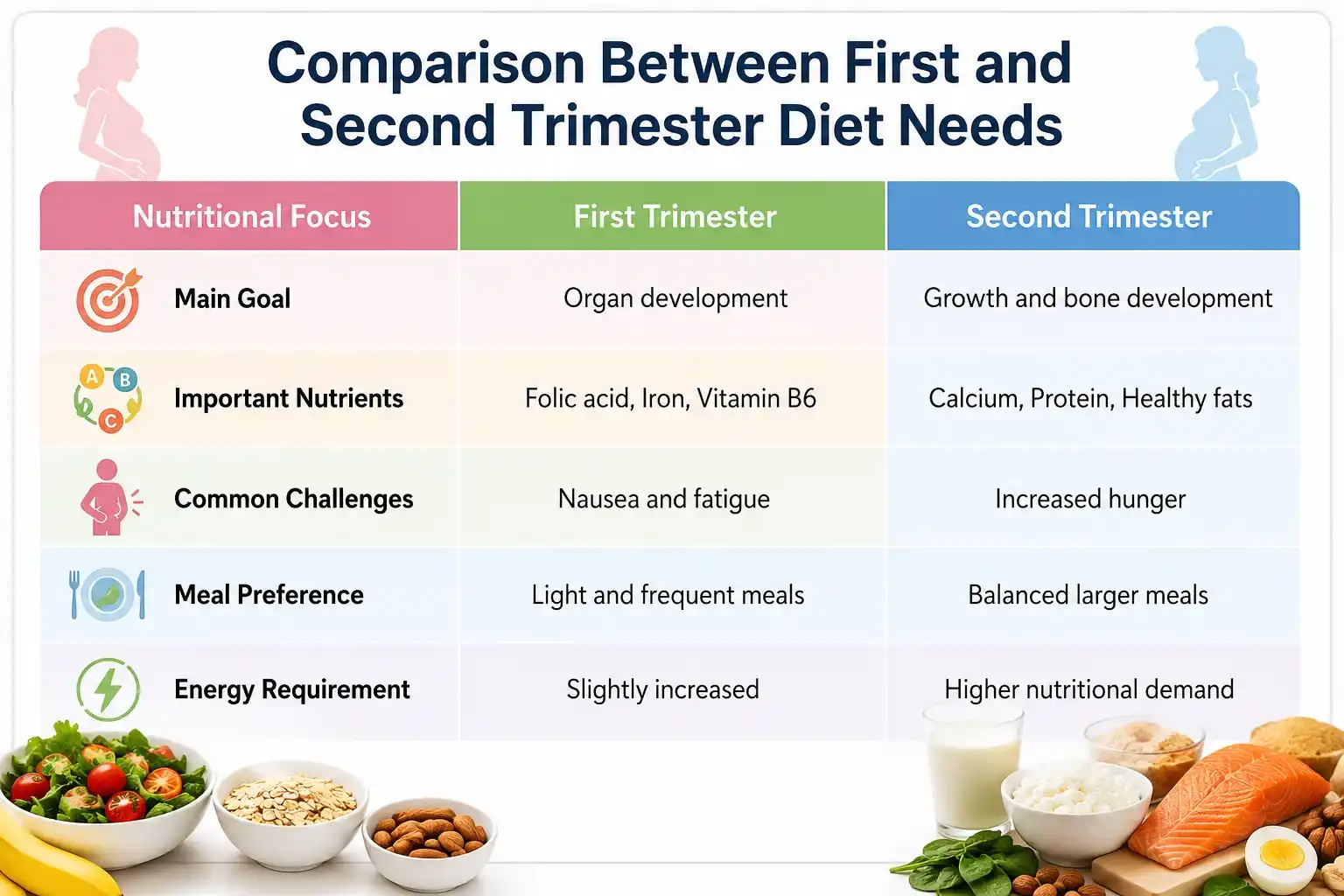
Nutritional Focus | First Trimester | Second Trimester |
|---|---|---|
Main Goal | Organ development | Growth and bone development |
Important Nutrients | Folic acid, Iron, Vitamin B6 | Calcium, Protein, Healthy fats |
Common Challenges | Nausea and fatigue | Increased hunger |
Meal Preference | Light and frequent meals | Balanced larger meals |
Energy Requirement | Slightly increased | Higher nutritional demand |
Understanding these changing needs helps create a healthier and more comfortable pregnancy journey.
Foods That Should Be Limited During Pregnancy
Some foods may raise health risks during pregnancy, so they should generally be eaten in small amounts or not at all.
Some of these are:
- Junk food that has been cooked too much
- Using drugs and smoking
- Too much caffeine
- Meat that is raw or not cooked enough
- Dairy items that haven’t been pasteurised
Doctors may also tell you to eat less fried foods and snacks that come in packages and are high in salt or preservatives.
Conclusion
It’s mostly about balance, nutrition, and consistency when it comes to the Indian pregnancy diet plan. It’s important to eat lighter foods that are high in folic acid and iron during the first trimester. In the second trimester, you need more calcium, protein, and nutrients that give you energy.
When made with care, homemade Indian food can easily provide many important nutrients. HealthifyAnu pushes practical nutrition advice and eating habits that are based on wellness and help people live healthier lives during pregnancy and afterward.
Eating right, staying hydrated, seeing a doctor regularly, and making healthy habits every day can all help the mother’s health and the baby’s growth.
Need Help?
Check Our FAQs
Find answers to common question
Folic acid and iron-rich foods are thought to be good for you. These include leafy veggies, lentils, whole grains, fruits, and more.
People often say to eat home-cooked foods like dal, roti, khichdi, paneer, curd, fruits, and vegetable meals.
A lot of women are told to drink water all day, usually between 2 and 3 litres, based on their needs.
Most of the time, moderately spicy food is safe, unless it makes your stomach acidic or makes it hard to swallow.
Calcium helps the baby's bones and teeth grow in a healthy way and also keeps the mother's bones healthy.