
For patients who suffer from Irritable Bowel Syndrome (IBS), can disrupt their daily life. Symptoms of bloating, and diarrhea typically get worse after eating the wrong foods. IBS Patient Meal Plan compliance means maintaining appropriate digestion and reducing gut irritation naturally.
For an IBS patient, a good diet chart emphasizes light, healthy, easily digested foods that support gut health without overloading the digestive system. Other such information that helps in the best management of IBS symptoms is also important alongside food choice.
What Is IBS?
IBS, Irritable Bowel Syndrome, is a prevalent digestive disorder affecting the large intestine. It is chronic and may cause repeated digestive problems, particularly after meals.
People with IBS may experience:
- Abdominal pain
- Bloating
- Gas
- Diarrhea
- Constipation
- Uneasy digestion
While IBS is not considered dangerous, it can adversely impact your comfort levels at home, in the office, and in your day-to-day life if you don’t take care of the symptoms.
The Importance of Adhering to an IBS Patient Meal Plan
Food has a direct impact on digestion, which is why diet is one of the most critical areas of IBS treatment. Many patients with IBS report abdominal pain shortly after eating certain foods.
The most useful IBS Patient Meal Plan can make sure that the digestive system stays calm and in balance. It could decrease bloating, maintain good bowel habits, enhance gut well-being, and help keep you energized during the day.
Instead of binge snacks of greasy or processed foods, patients with IBS most commonly benefit from simple, homemade meals made with mild ingredients.
Foods that usually work well for IBS patients
Some foods are more readily absorbed and are recommended for inclusion in a healthy diet chart for IBS patients. They are gentle on the stomach and may help reduce irritation.
Some good food options are oats, rice, banana, papaya, spinach, carrots, cucumber, eggs, grilled chicken, fish, and herbal tea. Drinking plenty of water throughout the day is also important since dehydration can exacerbate constipation and digestive distress.
Lots of healthcare specialists also recommend avoiding foods that are highly spicy, fried, heavily processed, or high in artificial ingredients.
7-Day IBS Patient Meal Plan
Day 1
The morning starts with oatmeal, prepared in almond milk, plus banana slices. For lunch, steamed rice, grilled chicken, and lightly cooked spinach. For dinner, a bowl of vegetable soup with quinoa is light and comforting.
Day 2
Simple Breakfast Choices: Boiled eggs with gluten-free toast. Lunch might consist of grilled fish with rice and cucumber salad. Pumpkin soup with roasted vegetables helps ease digestion in the evening.
Day 3
A banana smoothie with chia seeds can make a good breakfast meal. Quinoa salad with spinach and tofu may be eaten at lunch, steamed vegetables and baked chicken might make a balanced dinner.
Day 4
A small amount of cinnamon in rice porridge is gentle on your stomach. Lunch might consist of grilled salmon with mashed potatoes. For dinner, serve a light carrot soup with plain rice.
Day 5
Breakfast may consist of oatmeal topped with strawberry slices. Chicken soup with rice noodles is both filling and light for lunch. At dinner, it might be steamed fish with sautéed zucchini.
Day 6
Scrambled eggs with spinach are protein rich and digestible. Quinoa with grilled vegetables may fit for lunch. A baked potato with tofu goes well with dinner.
Day 7
You can even have some oats and banana pancakes for breakfast. Brown rice with grilled chicken and carrots at lunch. A vegetable stew with quinoa enriches dinner with a light, nutritious taste.
IBS-Friendly Foods vs Trigger Foods
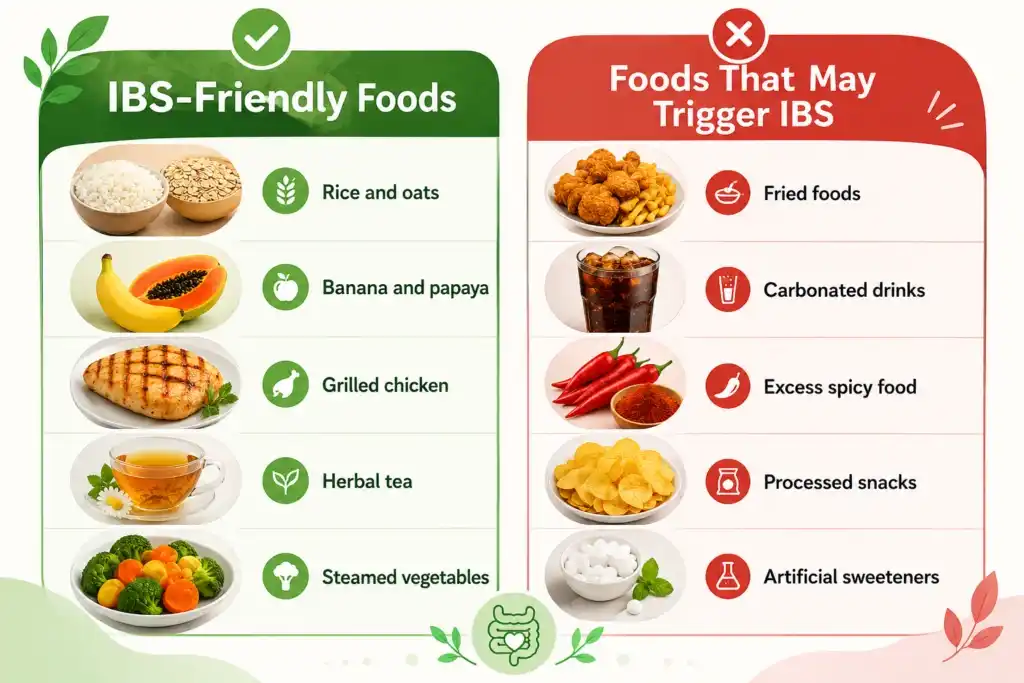
People suffering from (IBS) often realize that foods that help the digestive system may assist in digestion while those foods can otherwise cause pain. Learning the difference between IBS-friendly foods and trigger foods is important for better symptom management and long-term gut health.
IBS-friendly foods tend to be light, easy to digest, and mild to the stomach. They may help reduce bloating, gas, constipation, and stomach cramps. Such are oats, rice, bananas, papaya, spinach, cucumber, grilled chicken, eggs, and herbal tea.
Foods with soluble fiber and simple proteins are usually better tolerated because they lead to more evenly-digested food, and this does not disturb your gastrointestinal tracts. On the negative side, trigger foods can exacerbate symptoms of IBS and produce digestive distress.
Managing IBS Through Healthy Eating Habits
Examples of triggering foods for many IBS patients include: fried foods, spicy food, carbonated beverages, processed snacks, excess caffeine, artificial sweeteners, onion, and garlic. These foods can trigger gas production, bloating, diarrhea, or abdominal pain.
Because IBS presents differently, there is no one diet that works for everyone. Maintaining a food diary and watching the body respond to different meals can help to know what trigger foods you find yourself eating.
Regularly choosing fresh and homemade meals, which are balanced and fit can mean that this can help alleviate the symptoms of IBS without putting a strain on your body and in fact increase overall digestive health.
Simple Eating Techniques That Could Help You with IBS Symptoms
In addition to maintaining a healthy meal plan, healthy diet can improve digestion, ease stomach irritation.
Eat Smaller Portions
Larger meals can strain the digestive system a bit more. Lesser meals are usually easier to digest.
Maintain Regular Meal Timing
Skipping meals or eating at odd times will make IBS symptoms worse.
Eat Slowly
Eating too fast could exacerbate your bloating and gas formation.
Reduce Stress
Stress and anxiety are typically associated with IBS flares. Proper sleep, some simple exercise and some relaxation could bring benefits to gut health as well.
Simple mistakes IBS patients make
Most people make food choices unconsciously that cause their symptoms to get worse. Stomach irritation can be ignited due to regular spicy street food, excessive coffee use, overeating or processed snacks.
You’re also prone to overlook the food triggers. Because IBS impacts everyone individually so what you eat affects your digestive system differently, knowing the foods that create discomfort is critical to staying out of trouble long-term.
When Do You Go To Doctor?
Symptoms of IBS may, in large part, be a result of changes in diet and lifestyle but should symptoms be profound or recurring your doctor advice becomes vital.
If you see or hear of: You should seek medical advice:
- Blood in stool
- Sudden weight loss
- Severe abdominal pain
- Continuous diarrhea
- Long-term constipation
- Regular digestive upset after eating
A professional dietitian can develop a personalised IBS Patient Meal Plan related to the disease’s underlying health status and nutritional requirements.
Final Thoughts
Food options can help you manage your IBS if you stick to a healthy diet. A systematic and organized IBS Patient Meal Plan can help to alleviate bloating and increase better digestion by allowing the gut to continue to support healthy gut functionality more efficiently and naturally.
Because everybody is different, IBS patients need to adhere to an individual diet chart and regularly monitor symptoms to manage their individual diet accordingly.
Lifestyle shifts that are small in impact, balanced meals, good hydration, and stress management can make a big difference in the comfort level of digestion for years to come.
Need Help?
Check Our FAQs
Find answers to common question
Oatmeal, boiled eggs, banana smoothies, and gluten-free toast are considered good breakfast choices by IBS patients.
Yes, plain rice is easy to digest and a staple of any healthy diet chart for IBS patients
Yes, stress and anxiety can increase digestive pain with the potential for escalating IBS flare-ups.
Banana, papaya, kiwi, and orange are considered safer fruit options for many IBS patients.
Some people may experience symptoms due to lactose sensitivity. Lactose-free or plant-based milk can be better alternatives.
Some people notice improvements within a few days, while others may need several weeks to identify trigger foods and adjust their eating habits.
One Response