
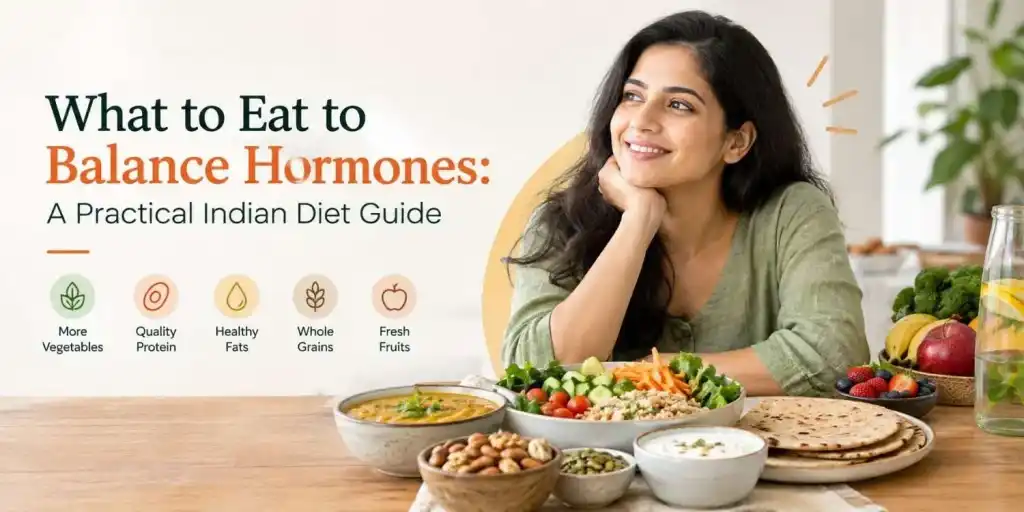
Hormones affect so many functions in the body (metabolism, appetite, menstrual cycles, reproductive health, mood, sleep and energy). Because of this change in hormonal health can sometimes be accompanied by concerns (irregular periods, unexplained weight changes, cravings, fatigue or mood fluctuations).
If you’re wondering what to eat to balance hormones the answer isn’t one food or a restrictive “hormone balancing” diet. Your eating pattern is much more important.
A balanced diet (vegetables, fruits, whole grains, protein rich foods, healthy fats and minimally processed foods) can give you the nutrients your body needs while supporting metabolic and overall health. Harvard’s Healthy Eating Plate similarly emphasizes vegetables and fruits, whole grains, healthy proteins and healthy fats. (The Nutrition Source).
This is not about completely changing Indian women’s eating habits — in many cases familiar foods like dal, veggies, curd, legumes whole grains nuts & seeds can be part of a nutritious hormone supportive eating pattern.
Why Your Everyday Diet Matters for Hormonal Health
Hormonal health is affected by nutrition, physical activity, sleep, stress, body composition and underlying medical conditions (among others).
Food doesn’t work like a medicine that “balances” a hormone immediately. It supports processes (blood sugar regulation, digestion, weight management etc.) overall metabolic health through consistently nutritious eating.
For example, dietary patterns high in vegetables, legumes, fruits nuts and whole grains and low in highly processed foods have been associated with better health outcomes. Harvard research just published found that dietary patterns emphasizing minimally processed plant foods fibre-rich foods lean proteins were also associated with lower risk of weight gain around menopause.
This is why it’s better to think about overall dietary quality than looking for a single hormone-balancing food.
What to Eat to Balance Hormones
Don’t worry about complicated food lists— base your meals around a few important food groups.
1. Include Lots of Vegetables
Vegetables contain fibre, vitamins minerals and other beneficial compounds as well as volume to your meals (spinach & leafy greens, broccoli, cauliflower, carrots, capsicum, beans, cucumber, tomatoes, pumpkin, gourds etc).
Cruciferous vegetables (broccoli & cauliflower) can also be included in a varied diet. You don’t have to eat lots of one vegetable because you think it will “detox” or balance hormones — variety is better than one miracle food!
2. Protein at every main meal
Protein makes meals more satisfying and muscle maintenance — it also makes it easier not to rely on refined snacks between meals.
Indian protein sources are:
- Dal
- Rajma
- Chole
- Moong
- Soy or tofu
- Paneer
- Curd
- Eggs
- Fish
- Chicken
Your ideal protein intake depends on age, body size, activity level and health goals (i.e. how much is enough?).
Ask yourself “Where is my protein in this meal?”. So instead of eating roti and vegetables only you could add dal, curd, paneer, eggs or another suitable source of protein.
3. Don’t fear healthy fats
Fat is part of a balanced diet. Don’t eliminate fat completely — look for healthy sources and appropriate portions:
- Walnuts
- Almonds
- Peanuts
- Chia seeds
- Flaxseeds
- Pumpkin seeds
- Sesame seeds
- Avocado
- Groundnut or mustard oil in small amounts
- Fatty fish if you eat fish
Nuts, seeds, avocados olive oil fatty fish are common parts of healthy eating patterns (e.g. those discussed above for conditions involving hormonal and metabolic health).
4. Pick High-Fibre Carbohydrates
Carbs don’t have to go away from a hormone supportive diet by default — the smarter approach is to pay attention to carbohydrate quality instead:
- Oats
- Brown rice
- Whole wheat roti
- Millets
- Quinoa
- Barley
- Beans
- Lentils
- Fruits
- Vegetables
Whole grains and legumes are fibre rich and generally more nutritious than highly refined carbohydrate foods so for an Indian meal you might have whole grain roti with dal and vegetables or rice with rajma and a big serving of veg.
5. Add Fruit Instead of Juice
Fruits are fibre and nutrients rich too. Good everyday choices can be:
- Apple
- Guava
- Orange
- Papaya
- Berries (if available)
- Pomegranate
- Pear
- Banana
- Seasonal local fruits
Whole fruit is generally more useful than turning fruit into a sugary beverage. Pairing fruit with nuts, seeds, curd or another protein-rich food makes snack satisfying also.
6. Include fermented foods when possible
Traditional Indian diets already include curd and some fermented preparations (e.g. buttermilk). Curd can be an easy addition to meals (protein and calcium) but fermented foods should not be sold as a cure-all for hormonal imbalance — they are simply part of an overall healthy eating pattern.
What Foods Should You Limit?
There is no universal list of foods that everyone with a hormonal problem must completely eliminate from their diet, but it makes sense to reduce your intake of foods that have lots of added sugar, refined carbohydrates, excess sodium or highly processed ingredients (e.g. limit frequent consumption of sugary drinks, sweets and desserts, packaged snacks, deep fried fast foods, refined bakery products, highly processed foods, excessively sugary breakfast cereals).
Harvard nutrition guidance suggests choosing high quality foods (vegetables, fruits, whole grains, healthy fats and healthy protein sources) over low quality foods (sugar and salt).
This doesn’t mean you can never eat your favourite Indian sweet again, restaurant meal or occasional snack — sustainable eating is usually more practical than an extremely restrictive diet anyway.
A Simple Indian Meal Pattern for Hormonal Health
Instead of following a complicated “hormone detox”, create balanced meals.
Breakfast
- Vegetable poha with peanuts
- Moong dal chilla with curd
- Vegetable oats with eggs
- Besan chilla with vegetables
- Idli with sambar
Lunch
- Roti or brown rice
- Dal/rajma/chole
- Seasonal veggies
- Salad
- Curd
Evening Snack
- Fruit with nuts
- Roasted chana
- Curd with seeds
- Sprouts chaat
Dinner
- Roti or another whole grain
- Paneer/tofu/dal/fish/chicken
- Cooked veg
- Salad or other fibre rich foods
(exact portions will vary depending on your nutritional needs activity level health conditions goals)
Can Diet Alone Correct a Hormonal Imbalance?
This is important to note. If you have a diagnosed hormonal condition food may be part of managing your overall health but diet should not be treated as a substitute for medical evaluation or prescribed treatment.
For example, hormonal concerns can be associated with PCOS thyroid disorders menopause and other health issues. In PCOS, for example, healthy eating and lifestyle changes may help metabolic health but diet does not “cure” the condition.
People taking thyroid hormone replacement should discuss dietary changes and supplement use with their doctor because some foods/supplements can affect medication absorption.
If you have irregular periods (or any period), unexplained weight gain or loss (or severe acne), excessive hair growth or loss (or infertility issues) or other symptoms that don’t go away after trying to fix them through food then speak to a qualified healthcare professional rather than try to fix it yourself.
When Should You Consider a Personalised Diet Plan?
Googling what to eat to balance hormones will give you general ideas but your nutritional needs may be completely different to someone else’s (e.g., woman with PCOS; someone approaching menopause; person with thyroid disease; person trying to lose weight).
A personalised plan can consider:
- Current eating habits
- Health goals
- Lifestyle and activity
- Food preferences
- Existing medical conditions
- Dietary restrictions
- Weight-management goals
- Menstrual and reproductive health concerns
This is where nutrition guidance from a professional nutritionist would be more useful than following a generic social media diet.
Get Personalised Nutrition Guidance With Healthify by Anu
If you don’t know what to eat for your nutritional goals, working with a qualified dietitian or nutrition professional can help build an eating pattern that makes sense rather than jumping around between restrictive diets.
If you are looking for the best dietician in Pune, Healthify by Anu can help you explore nutrition-focused guidance based on your needs and goals.
Instead of asking only “What food balances hormones?”, a better question is:
“What eating pattern is appropriate for my body, lifestyle and health goals?”
That shift can help you move away from quick-fix hormone diets and toward sustainable nutrition habits that you can actually follow long term.
2 Responses