
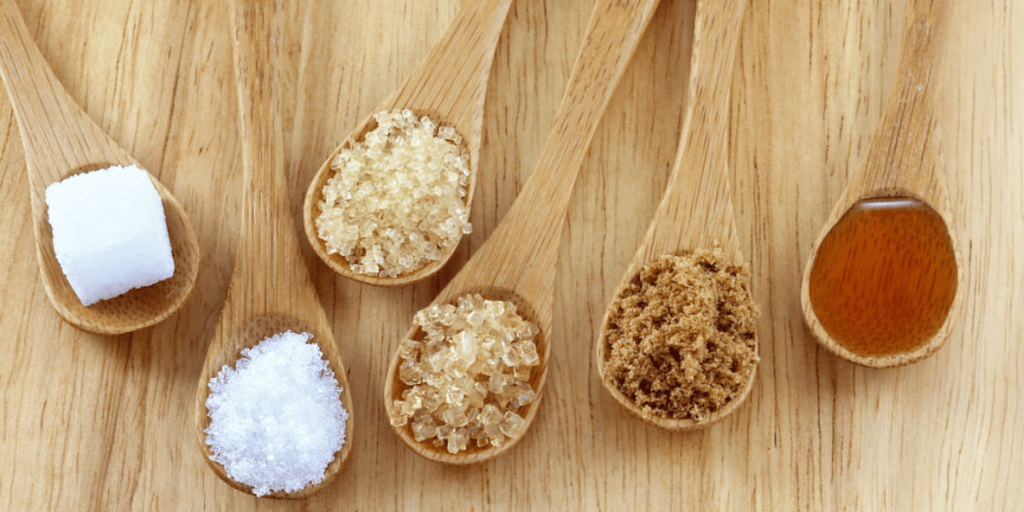
Sugar or sucrose is a type of carbohydrates which plays an important role in our daily life. It has wide varieties of uses, flavor enhancing, preservative, thickener. It is obtained from Saccharum officinale plant. Its white crystalline powder with a sweet taste. It is a disaccharide made up of glucose and fructose with Glycemic index 69.
- White Sugar: It is also called refined sugar, made from sugarcane juice which undergo refining process.
- Brown Sugar: This sugar undergoes less processing and retain molasses which gives brown color to the sugar.
- Jaggery: It is less processed form of sugar. The sugarcane juice is dried and concentrated, thus retaining most of minerals, especially a good source of iron. It contains about 70% sucrose, 10-15% isolated glucose and fructose and rest minerals and vitamins.
- Honey: Honey is a natural form which is obtained from nectar of flower by honey bees (Apis mellifera). It has more of fructose (38%) than glucose (31%) with many important vitamins and minerals. It has number of benefits like anti-inflammatory, antibacterial, antioxidant and anticancer.
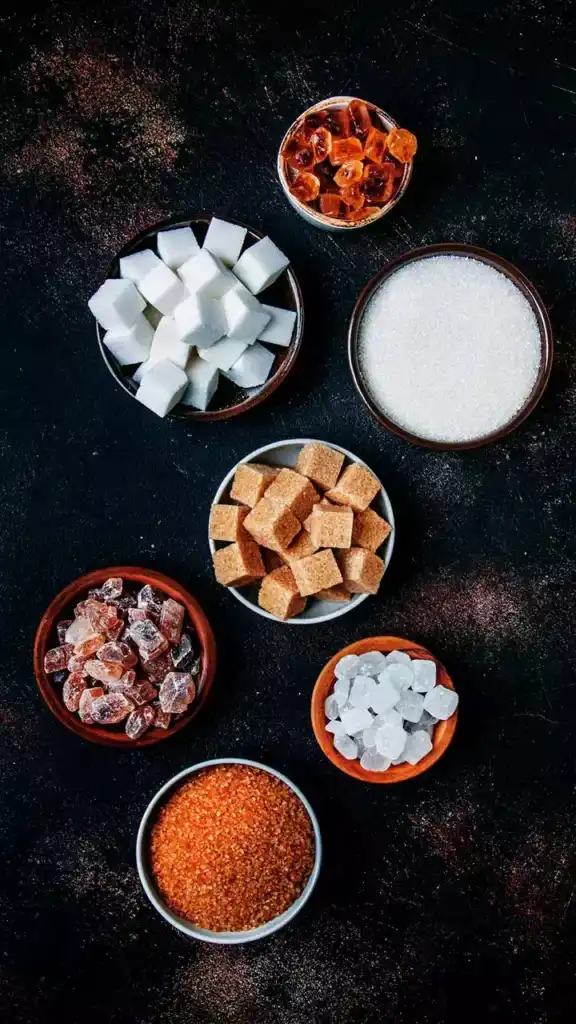
Other Forms of Sugar:
- Coconut Sugar: It is also known as coconut palm sugar made from coconut palm sap which is sugary circulating fluid of the coconut plant. It contains minerals, like iron and calcium, potassium. It also contains fiber inulin which slows down the absorption and it has less glycemic index as compared to table sugar but has same number of calories as regular sugar.
- Beet Sugar: It is derived from sugar beet plant (Beta vulgaris), a root vegetable closely related to beetroot. It is an important sugar crop that supplies 35% of sugar in the world. It contains 99% sucrose.
- High fructose Corn Syrup (HFCS): It is manufactured from corn starch by enzymatic isomerization. It is a cheaper, sweeter source than sucrose andbecome an increasingly common food ingredient in the last few decades. It provides a better flavor, texture, freshness, color, pourability, consistency in comparison to the sucrose. It is available in different form as 45 %, 55% and 90% fructose. Excess consumption of fructose increases the oxidative stress, lipogenesis in body which leads to metabolic syndrome. (Eur Endocrinol. 2014 Feb; 10(1): 51–60.)
- Maltodextrin: It is made from corn, rice, potato starch or wheat and is high on glycemic index, 110. It spikes the blood sugar level, so has to be avoided by diabetic or people with insulin resistance. It also changes the gut bacteria composition, suppress growth of probiotics. It also increases growth of E.coli associated with autoimmune disease like Crohn’s disease.
To sum up, every form of sugar has its own pros and cons. It is advisable to consume any form of sugar if a person is leading sedentary lifestyle and if a person is physically active, then too the dose should be minimal.