
Polycystic Ovarian Disease (PCOD) is a frequent hormonal disorder that many women encounter due to lifestyle changes, stress, and inappropriate eating habits. One of the best methods of controlling symptoms of this disorder naturally is through a well organized PCOD Diet for Healthy Weight Loss that promotes hormone balance and slow fat loss.
A properly organized diet can help manage weight, improve energy level, improve skin condition, and regulate your menstrual cycle. This guide has been composed to provide a real world 7-day meal plan along with expert voiced suggestions of how to achieve successful weight loss with the aid of a proper diet.
How Diet Promotes PCOD
Your body’s utilization of insulin depends very much on PCOD and the level of insulin resistance you have. Having PCOD means you have a higher amount of fat stored around your waist, as well as imbalanced hormones, which continues to create more insulin resistance.
Good blood sugar control helps reduce your cravings and reduce overeating, along with helping you get your hormones regulated properly to help increase your metabolism through healthy hormone regulation.
The diet plan for women who have PCOD should focus on the consumption of foods that are nutrient dense in order to avoid the use of calorie restriction as a single method of weight loss.
Essential Components Of Food For PCOD Diet for Healthy Weight Loss
Before starting the 7-day schedule, it’s vital to consider the variables that contribute to a successful plan for PCOD Healthy Weight Loss:
1. Pick Food Options With A Low Glycemic Index (GI)
Low Glycemic Index (GI) food options have a lower content than regular foods that take longer to be digested. Here are examples of foods that are low Glycemic: Vegetables, Whole Grains, Oats (and others more often), Vegetables, Fruits, and Beans.
2. Add More Protein To Your Daily Meals
Adding protein to your meals can help keep you feeling full longer throughout the day by preventing cravings or excessive eating later. Sources: Eggs, Tofu, Lentils, Paneer Cheese, Fish, and Skinless Poultry.
3. Add Healthy Fats To Your Meal Plan
Just as important as protein is healthy fats for creating hormones; other than Protein, there are certain types of healthy fats needed for creating hormones including Olive Oil, Avocado, Nuts, and Seed Fats.
4. Reduce The Use Of Packaged Foods & Processed Foods
Most packaged or processed foods contain very high amounts of sugar, white flour, or processed snacks which cause the body to spike Insulin Levels.
5. Eat Smaller Meals More Often
Eating smaller meals eaten more often can eliminate hunger and help keep energy constant throughout your daily activities.
7 Day Weight Loss Diet Menu With PCOD
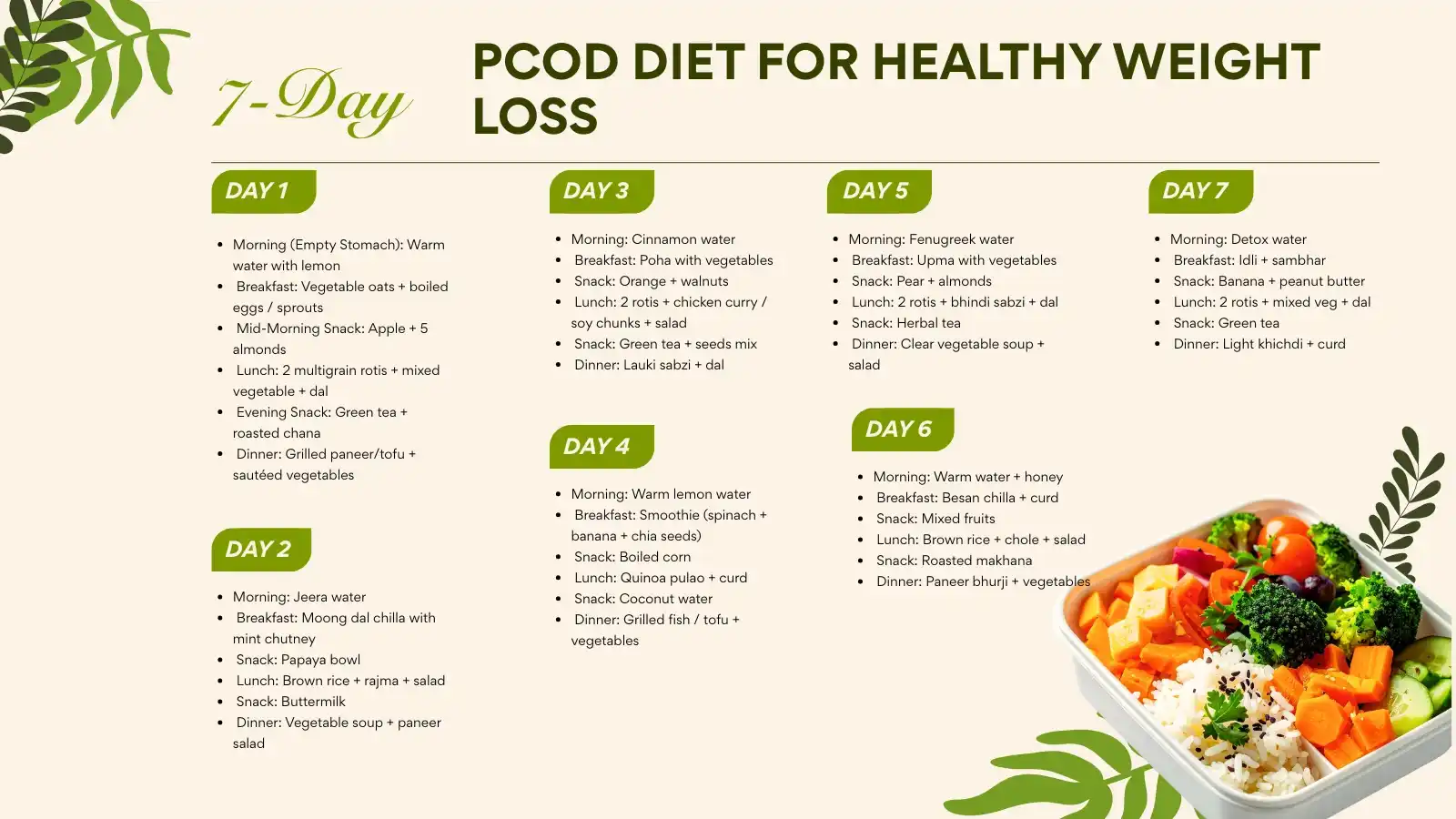
A suggested or customized weekly menu plan you can use by individual preference.
Day 1
Morning (Empty Stomach): Warm water with lemon Breakfast: Vegetable oats + boiled eggs / sprouts Mid-Morning Snack: Apple + 5 almonds Lunch: 2 multigrain rotis + mixed vegetable + dal Evening Snack: Green tea + roasted chana Dinner: Grilled paneer/tofu + sautéed vegetables
Day 2
Morning: Jeera water Breakfast: Moong dal chilla with mint chutney Snack: Papaya bowl Lunch: Brown rice + rajma + salad Snack: Buttermilk Dinner: Vegetable soup + paneer salad
Day 3
Morning: Cinnamon water Breakfast: Poha with vegetables Snack: Orange + walnuts Lunch: 2 rotis + chicken curry / soy chunks + salad Snack: Green tea + seeds mix Dinner: Lauki sabzi + dal
Day 4
Morning: Warm lemon water Breakfast: Smoothie (spinach + banana + chia seeds) Snack: Boiled corn Lunch: Quinoa Pulao + curd Snack: Coconut water Dinner: Grilled fish / tofu + vegetables
Day 5
Morning: Fenugreek water Breakfast: Upma with vegetables Snack: Pear + almonds Lunch: 2 rotis + bhindi sabzi + dal Snack: Herbal tea Dinner: Clear vegetable soup + salad
Day 6
Morning: Warm water + honey Breakfast: Besan chilla + curd Snack: Mixed fruits Lunch: Brown rice + chole + salad Snack: Roasted makhana Dinner: Paneer bhurji + vegetables
Day 7
Morning: Detox water
Breakfast: Idli + sambhar
Snack: Banana + peanut butter
Lunch: 2 rotis + mixed veg + dal
Snack: Green tea
Dinner: Light khichdi + curd
Dietary Guidelines for Women with Polycystic Ovarian Syndrome PCOD for Weight Loss
Foods to Include in Your PCOD Diet
When following a weight reduction program for women with PCOS, it is encouraged to consume these items as part of your overall nutrition:
Whole Grains- Brown Rice, Quinoa, Oats
Fresh Veggies- Most Effective are Leafy Greens
Low-Sugar Fruits- E.G. Apple, Berry, Papaya
Lean Protein (Eggs, Chicken, Tofu, Paneer)
Nuts/Seeds– (Almonds, Flaxseed, Chia)
Some Foods Can Worsen PCOS Symptoms or Reduce Your Ability to Lose Weight with PCOS:
Foods to Avoid
Processed sugar and sweets
White bread and maida
Fried food / Junk food
Soda / Sugary drinks
Caffeine excess
Additionally to the above diet, to achieve the best outcome with weight loss, it is important to incorporate good lifestyle habits.
Lifestyle Tips for Better Results
1. Exercise
Daily exercise helps with weight management, to lose weight, it is important to exercise at least 30-45 minutes per day (at least 5 days per week). Walking, yoga, and strength training exercises are all beneficial.
2. Sleep
Lack of sleep can affect levels of hormones and increase hunger. Targeting quality sleep of 7-8 hours per night enables your body to function properly and breaks the cycle of change that accompanies concern about PCOS.
3. Stress
Stress can create more of a hormonal imbalance. Use stress-reduction techniques, such as deep breathing and/or meditation.
4. Hydration
The average healthy person needs 2 – 3 litres of water every day to maintain healthy metabolism.
Common Dieting Pitfalls
There are some common dieting mistakes that cause people following a diet to not lose weight, including:
- Skipping meals
- Restricting themselves to an extremely low calorie intake
- Not consuming enough protein
- Eating healthy foods but larger portions
- Not having daily consistency in your eating habits
Consistency is more important than perfection.
Can You Follow This Diet?
The diet that has been created serves as a guideline to help individuals create healthy habits as they go along. But because everybody has different needs based on their ages, how much each person weighs, how active they are (Sedentary / Active) and any past health issues they may have had, the very best way to determine what works best for the individual is going to be to contact a Registered Dietitian Nutritionist directly and request an individualized program.
Your Thoughts?
Polycystic Ovarian Syndrome (PCOS) is an incurable disorder that takes time to develop and maintain sustainable changes in how you eat and live, and then to implement these in an effective manner. With consistent effort, you will lose weight and also improve other aspects of your health through your new PCOS Weight Loss Diet. Your ultimate goal should be for you to continue making progress while losing weight and improving health through making changes to the way that you eat that will be sustainable to you long-term.
All of the transformations described above will come from your consistent commitment to yourself and your body by starting with simply being aware of what you feel like on a daily basis, and then, with time and practice, you will be able to adhere to your new eating patterns and lifestyle, as well as establishing new and long-lasting habits.
Need Help?
Check Our FAQs
Find answers to common question
Yes, a well-balanced PCOD weight loss diet plan can help reduce symptoms by improving metabolism and regulating insulin levels, which supports better hormonal balance.
Weight loss with a PCOD diet is usually gradual, around 2–4 kg per month with a healthy diet and regular exercise. Rapid weight loss is not recommended as it may disrupt hormonal balance.
Avoid refined sugars, maida (white flour), fried foods, packaged snacks, and sugary drinks as they increase insulin resistance and make weight loss more difficult.
Intermittent fasting may improve insulin sensitivity for some individuals with PCOD, but it is not suitable for everyone. It is best to consult a dietitian before starting.
Yes, rice can be included in moderation. Opt for brown or red rice and pair it with protein and fiber to maintain stable blood sugar levels.
Yes, combining exercise with a PCOD diet is essential. Cardio, strength training, and yoga help improve insulin resistance and support effective weight loss.