
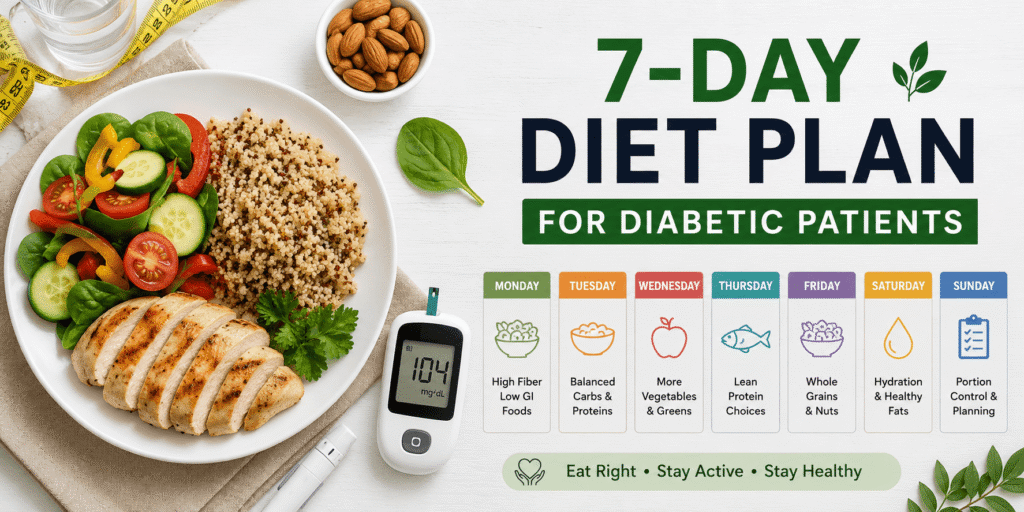
The management of diabetes does not mean that you can no longer enjoy any food prepared. You just need to learn how to create a balanced diet plan for yourself, select carbohydrates smartly and stick to your eating patterns.
One of the ways you can easily put together a diet plan is by creating a 7-day diabetes diet. But there’s no single plan of action that will suit the whole populace of diabetic patients.
In order to be able to choose a perfect diet plan for yourself, one may need to take into account such factors as:
- Kind of diabetes
- Age
- Body mass index
- Physical activity
- Current blood sugar levels
- Medication and people who are taking insulin
- Kidney and heart condition
- Food habits
This article provides a 7-day diabetic meal plan that relies on some basic rules of balanced eating. But if you want your own personalized diabetes meal plan, it’s recommended to see a qualified nutritionist or doctor.
At Healthify, we help people understand the importance of nutrition and how healthy eating habits can facilitate their journey to a healthy lifestyle.
What Should a Diabetic Patient Eat?
A healthy diabetes-friendly diet usually focuses on balance rather than completely eliminating one food group.
A balanced plate may include:
Non-Starchy Vegetables
Examples include:
- Spinach
- Bhindi
- Lauki
- Tinda
- Cauliflower
- Cabbage
- Broccoli
- Cucumber
- Beans
These foods can add fibre and volume to meals.
Protein-Rich Foods
Depending on dietary preferences, options may include:
- Dal
- Chana
- Rajma
- Paneer
- Curd
- Eggs
- Fish
- Chicken
- Tofu
Protein can help make meals more satisfying.
High-Fibre Carbohydrates
Carbohydrates can still be part of a diabetes-friendly diet, but portion size and quality matter.
Examples include:
- Whole wheat roti
- Oats
- Millets
- Brown rice
- Quinoa
- Whole grains
The amount of carbohydrates suitable for an individual can vary.
Healthy Fats
Moderate amounts of healthy fats can come from foods such as:
- Nuts
- Seeds
- Peanuts
- Certain vegetable oils
Foods That May Cause Blood Sugar Spikes
Individuals with diabetes do not necessarily have to categorize food as either good or bad; however, it may be a challenge to control blood glucose levels if a person frequently eats refined foods or foods with added sugar.
Cut back or limit consumption of:
- Sugary beverages
- Treats and desserts
- Excess amounts of sugar
- Processed baked products
- Big servings of white rice
- Heavily processed snacks
- Packaged sugary products
The size of the portions and the meal composition play an important role.
7-Day Diet Plan for Diabetic Patients
The following 7-day diet plan for diabetic patients is a general example and should not replace individual medical nutrition advice.
Portion sizes should be adjusted according to your energy needs and medical guidance.
Day 1: Start With Balanced Meals
Early Morning
- Water
- A small portion of nuts, if suitable for you
Breakfast
- Vegetable oats or vegetable poha
- Unsweetened tea or coffee, if preferred
Mid-Morning Snack
- One portion of a suitable whole fruit
Lunch
- Whole wheat roti
- Dal
- Mixed vegetable sabzi
- Salad
- Plain curd
Evening Snack
- Roasted chana or another protein-rich snack
- Unsweetened tea
Dinner
- Roti
- Paneer or tofu-based vegetable preparation
- Salad
Focus for Day 1: Include vegetables and protein with your main meals.
Day 2: Add More Fibre
Breakfast
- Vegetable upma made with appropriate portions
- Curd
Mid-Morning Snack
- A suitable fruit portion
Lunch
- Roti
- Chana or rajma
- Seasonal vegetables
- Salad
Evening Snack
- A small handful of nuts or roasted snacks
Dinner
- Vegetable soup
- Roti or another appropriate whole-grain option
- Dal or paneer
Focus for Day 2: Try to include fibre-rich foods throughout the day.
Day 3: Focus on Protein Balance
Breakfast
- Besan chilla with vegetables
- Plain curd
Mid-Morning Snack
- Fruit in an appropriate portion
Lunch
- Roti
- Dal
- Bhindi or mixed vegetable sabzi
- Salad
Evening Snack
- Roasted makhana or chana
Dinner
- Vegetable and protein-based meal
- Small portion of whole grains if appropriate
Vegetarians can include options such as paneer, tofu, dal and legumes.
Non-vegetarians may include suitable portions of eggs, fish or lean protein based on their dietary preferences and medical advice.
Focus for Day 3: Avoid making meals mostly carbohydrate-based. Add protein and vegetables.
Day 4: Choose Smarter Breakfast Options
Breakfast
- Vegetable omelette with whole-grain toast, or
- Moong dal chilla for vegetarian preferences
Mid-Morning Snack
- One suitable fruit portion
Lunch
- Brown rice or another whole-grain carbohydrate in an appropriate portion
- Dal
- Vegetable sabzi
- Salad
Evening Snack
- Unsweetened curd or a protein-rich snack
Dinner
- Roti
- Mixed vegetables
- Paneer, tofu, dal or another protein source
Focus for Day 4: Breakfast can influence hunger and food choices later in the day, so aim for a balanced option.
Day 5: Include Variety
Breakfast
- Idli with sambar
- Add vegetables where possible
Mid-Morning Snack
- Fruit portion based on individual requirements
Lunch
- Roti
- Seasonal vegetable
- Dal
- Salad
- Curd
Evening Snack
- Roasted chana
- Unsweetened tea or coffee
Dinner
- Vegetable khichdi prepared with balanced portions
- Salad
- Curd, if suitable
Focus for Day 5: A healthy diabetes diet does not have to be repetitive.
Day 6: Plan Your Meals in Advance
Breakfast
- Oats with vegetables, or
- Another balanced high-fibre breakfast
Mid-Morning Snack
- A suitable fruit or small snack
Lunch
- Roti
- Rajma or chole in an appropriate portion
- Vegetable preparation
- Salad
Evening Snack
- Nuts or seeds in moderate portions
Dinner
- Roti
- Lauki, tori or another seasonal vegetable
- Dal or protein source
Focus for Day 6: Planning ahead can reduce dependence on highly processed convenience foods.
Day 7: Keep It Simple and Sustainable
Breakfast
- Vegetable poha
- Curd or another suitable protein addition
Mid-Morning Snack
- Fruit portion
Lunch
- Roti
- Dal
- Mixed vegetables
- Salad
Evening Snack
- Roasted makhana or chana
Dinner
- A lighter balanced meal based on your individual needs
- Vegetables
- Protein
- Appropriate carbohydrate portion
Focus for Day 7: The best diet plan is one you can follow consistently.
A Simple Diabetes-Friendly Plate Method
Visualising the plate rather than counting each food may help some people.
Thus, one approach is:
Half the Plate
Non-starchy vegetables.
One-Quarter of the Plate
Protein foods.
One-Quarter of the Plate
Whole grains or carbohydrates in useful amount.
But the need can vary widely, especially in the case of insulin and glucose-lowering medicines users.
Can Diabetic Patients Eat Fruits?
Yes, fruits can indeed be included in the balanced diet of several individuals suffering from diabetes. Care should be taken regarding the type and quantity of the fruit consumed as part of the daily meal plan.
Rather than avoiding all fruits, focus on:
- Portion size
- Variety
- Whole fruits rather than fruit juice
- Your individual blood glucose response
Fruit juice raises blood glucose much faster than eating the whole fruit because it contains fewer fibres and is consumed in greater amounts.
If you wish to learn more about the utilization of particular fruit in your meal plan, resorting to personalized dietetic support may be helpful.
Can Diabetic Patients Eat Rice?
The rice must not be entirely eliminated from diabetes menus.
The variety of rice, the amount consumed and other foods eaten with it may also play a role in blood glucose levels.
Instead of eating a very large serving of rice alone, consider pairing an appropriate portion with:
- Dal
- Vegetables
- Protein
- Salad
Some people may choose brown rice or other whole-grain alternatives, but portion control remains important.
The most suitable approach depends on individual health needs.
What Is the Best Breakfast for a Diabetic Patient?
There is no single “best” breakfast for everyone.
A balanced breakfast may include a combination of:
- Protein
- Fibre
- Vegetables
- Appropriate carbohydrate portions
Examples may include:
- Moong dal chilla
- Vegetable oats
- Besan chilla
- Eggs with vegetables
- Idli with sambar
- Vegetable poha with a protein addition
Avoid relying heavily on sugary cereals, sweetened drinks or refined bakery products as regular breakfast choices.
Common Mistakes to Avoid While Following a Diabetes Diet
1. Skipping Meals
Some individuals avoid eating meals thinking that doing so would help them manage their diabetes. However, this may not be a good option for everyone and especially for people who take diabetes medicines. Seek proper guidance from your doctor with regards to what meal hours would suit you best.
2. Removing All Carbohydrates
Carbohydrates are a good source of energy. The objective is to moderate their amount and kind of type of carbohydrates rather than eliminating them completely.
3. Drinking Fruit Juice Instead of Eating Fruit
Whole fruits provide higher amounts of fiber than juice. Additionally, juices enable people to consume high amounts of sugar quickly.
4. Ignoring Portion Size
Even nutritious foods can contribute significant calories or carbohydrates when eaten in very large quantities.
Portion awareness is important.
5. Following Internet Diet Trends Without Professional Guidance
Every person with diabetes has different needs.
A diet that works for someone else may not be appropriate for you.
How Physical Activity Supports Diabetes Management
Food is only one part of managing diabetes.
Regular physical activity may also support overall health and blood glucose management.
Depending on your health and medical advice, activities may include:
- Walking
- Cycling
- Yoga
- Strength training
- Swimming
- Other forms of regular movement
If you have diabetes-related complications or other health concerns, speak with your healthcare provider before starting a new exercise programme.
Why a Personalised Diet Plan Can Be More Effective
A general 7-day diet plan for diabetic patients can provide useful ideas, but it cannot account for every person’s medical needs.
A personalised plan can consider:
- Blood glucose patterns
- HbA1c and other medical information
- Medicines
- Weight goals
- Daily routine
- Food preferences
- Vegetarian or non-vegetarian diet
- Activity levels
- Other health conditions
This can make the plan more realistic and easier to follow over the long term.
How Healthify by Anu Can Help
At Healthify by Anu, we want people to manage their diet in a way that does not require them to adhere to an absurdly strict diet plan.
We prioritise helping people to identify their eating patterns and choose more prudent and sustainable options.
Whether you need help in diabetes-friendly eating, weight management or simply improving your nutrition habits, individualised guidance is preferable to looking at the same diet plans available on the net.
A personalised nutrition plan can help you understand:
- Which foods fit your lifestyle
- How to create balanced meals
- Appropriate meal timing
- Portion awareness
- How to make sustainable dietary changes
Get a Diet Plan Designed Around Your Lifestyle
It is possible to create a meal plan lasting for a week that is designed for people with diabetes. With such meal planning, one can become familiar with the idea of healthy eating. However, real success in diabetes management requires customized meal solutions that work best for you. Therefore, if you want to get the best meal plans, you should be ready to seek help. Healthify by Anu makes it possible to get personalized diet recommendations that will help one to understand how one can improve their nutrition.
Interested in obtaining a meal plan made for your lifestyle and health needs? Contact Healthify by Anu for information about our personalized nutritional support.
Need Help?
Check Our FAQs
Find answers to common question
The best diabetes plan will vary for each person based on the type of diabetes they are facing, medications they are taking, blood glucose levels they have, what activities they do, and any other health complications that may exist. Generally, a person’s weekly meal plan will involve equal portions of vegetables, protein, and high fiber carbs.
For individuals living with diabetes, rice can be incorporated into their diets as long as the appropriate serving sizes are followed along with individual dietary needs. It's advisable to combine carbohydrate intake with protein and vegetables to create a more balanced meal.
As a general rule of thumb, moderation in regards to sugar-laden beverages, sweets and highly processed foods is recommended, but personalized restrictions need discussion with the doctor..
In most cases, whole fruits would be part of the balanced diet for a person with diabetes, but the type and portion would depend on the individual's requirements.
Not everyone has the same answer to this situation. The frequency of meals must include things like medicine, how much insulin someone uses, whether or not they feel hungry and the type of routine they usually follow.
No. This is simply an educational example. Individuals taking insulin or other medications for diabetes should seek personal guidance before making considerable changes to their diets.