
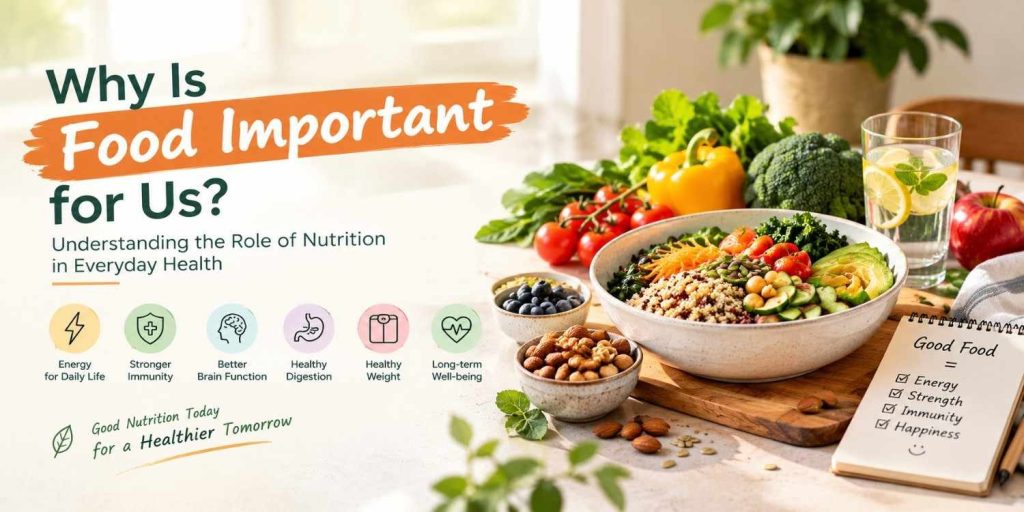
Food isn’t just something we eat when we are hungry. It gives us the energy to work, study, exercise and do our everyday jobs; it provides nutrients that make the body grow; repair tissues; maintain normal functions; support well being.
Knowing why food is important to us makes it easier for us to choose what we eat every day. If you eat traditional Indian food at home, take lunch with you to work or rely heavily on restaurant meals — quality and balance of your diet will affect your health over time.
1. Food gives us energy for our daily activities
Everything we do (walking and climbing stairs to concentrate at work) needs energy. We get this from food carbohydrates, fats and proteins. Carbohydrates (roti, rice, oats, fruits and millets) are an important source of energy; healthy fats (nuts, seeds and cooking oils) also give energy; protein maintains tissue and many other functions in the body.
If you eat too little or have an unnecessarily restrictive diet it can make you tired or difficult to meet your nutritional needs. Eating a balanced pattern provides energy throughout the day.
2. Food Makes the Body Grow and Repair
We constantly maintain & repair tissues, protein is part of that (muscles, skin etc). Dal, rajma, chana, milk, curd paneer eggs, fish, chicken nuts seeds can help you get your daily protein intake. Calcium vitamin D and other nutrients also support important functions (e.g., bone health).
Nutritional needs vary with age and life stage Children adolescents pregnant women older people people recovering from illness may need different nutritional requirements.
3. Food supports immunity and normal body function
The immune system needs several nutrients to work normally (vitamins, minerals, protein and other parts of a varied diet) are part of the body’s natural defences (guava amla citrus fruits etc vitamin C; lentils beans leafy vegetables meat iron; nuts seeds whole grains legumes various minerals).
No food can prevent every infection or replace medical care but eating a variety of nutrient-rich foods regularly will support normal immune function and general health.
4. Food is important for brain function and concentration
The brain needs a constant supply of energy and nutrients to do its job every day. If you don’t eat enough food, are dehydrated or have certain nutritional deficiencies it will affect your energy levels, attention span and general well being.
A practical breakfast, balanced lunch and snacks (vegetable poha with peanuts; eggs with whole wheat toast or dal with roti etc.) when needed will help you keep a regular eating routine. Nutrients from different foods — vegetable poha with peanuts; eggs with whole wheat toast; dal with roti — all together can also be part of nutrition too.
Good nutrition is one part of supporting brain health. Sleep, exercise and stress management are also important too.
5. Food Helps Maintain Digestive Health
Our digestive health depends in part on what we eat and how consistently we meet our nutritional needs — fibre helps with regularity; fluid helps the digestive system work properly.
Whole grains vegetables fruits beans lentils nuts seeds are all sources of fibre. Curd and other fermented foods can be included in a balanced diet (tolerance and preference permitting).
If bloating acidity constipation or other digestive symptoms occur frequently don’t assume one food is causing it — persistent symptoms need to be assessed by a professional to find out possible causes.
6. Food contributes to healthy weight and metabolic health
What we eat (amount & type) can influence body weight, blood glucose, blood lipids etc. Healthy eating is not counting calories or avoiding carbs — a balanced meal might have some veg protein source, whole grains or other suitable carbs and some healthy fat too; portion sizes and food choices should be based on needs, activity levels and health conditions.
People with diabetes insulin resistance, thyroid disorders, excess weight etc may need personalized nutrition guidance to translate general dietary advice into everyday choices.
7. Food links health to culture and lifestyle
Food in India is linked to family traditions, festivals, regional cuisines, social events etc. Healthy eating doesn’t mean you have to give up your favourite dishes or eat an expensive diet — small changes can make everyday meals more balanced e.g. add veggies to poha dal with rice; fruit instead of sugary snacks most of the time; protein source at breakfast etc.
Consistency is more important than trying to eat perfectly every meal. A realistic approach makes healthy habits easier to maintain over time.
What Does A Balanced Daily Diet Look Like?
The right balance of nutrients not just one food group (e.g meat) should be in your diet but depending on your needs and preferences daily meals might include:
- Vegetables and fruits: All colours & types for fibre vitamins minerals.
- Whole grains and other carbs: Roti rice oats millets or other suitable staples for energy.
- Protein rich foods: Dal beans, dairy eggs, fish chicken tofu or other preferred sources.
- Healthy fats: Nuts seeds cooking oils in appropriate amounts.
- Water: Fluid intake according to activity and environmental health.
The right balance is different for everyone. Medical conditions, food intolerances, culture preferences, life stages all affect nutritional needs.
Get personalised nutrition guidance from HealthifyByAnu
Understanding why food is important is the first step. Putting that knowledge into your own health, routine and food preferences is where personalised guidance comes in.
At HealthifyByAnu, Anu Mahajan provides personalised nutrition support for digestive health, weight management diabetes & metabolic health thyroid nutrition pregnancy nutrition post pregnancy weight management.
You don’t have to rely on a generic diet chart when you get advice on what you need, how to live and what you want to achieve.
Contact HealthifyByAnu to find out what nutritional requirements you have and take the first step towards building healthier sustainable eating habits.